Why AgenticOps is inevitable
The story CloudThinker is building.
2 a.m. An alert fires. A bank's payment gateway starts returning errors — and the on-call engineer, who joined the rotation last week, doesn't know where to start. The one person who truly understood the system left three months ago, taking everything in their head with them. Every minute that passes is failed transactions, and customer trust leaking away.
This scene repeats everywhere. At its root is a truth few name out loud: systems are changing faster than humans can operate them — and that gap widens every year.
It was built up over three layers of technology. Each one solved an old problem, then gave birth to a bigger new one.
Microservices let us move faster — in exchange, a system that once fit in one person's head shattered into hundreds of interdependent pieces.
Cloud gave us infinite elasticity — in exchange came leaking costs, soaring complexity, and a knowledge gap: very few people grasp the whole system anymore.
AI is accelerating how fast we write code like never before — but here's the paradox: the faster code is written, the faster the system changes, and every change is a fresh chance for something to break. AI doesn't make operations easier. It makes them harder — exponentially.
Two lines drifting apart
Picture two lines.
The first climbs steeply: the complexity and rate of change of the system. The three layers above stack up and drive it skyward.
The second is nearly flat: how much humans can handle in time. Great engineers are scarce. Understanding of the system lives in a few people's heads — like that engineer who left. And the best of them burn out from on-call and walk away too. Burnout doesn't just cost you people; it drags the capacity line down at the very moment the complexity line is shooting up.
The space between the two lines is the work humans can't get to in time. It shows up as outages, wasted spend, security holes, and configuration drift — more of it every day.
The old playbook can't keep up
For as long as anyone can remember, everyone has tried to close this gap three ways:
Add more tools — more monitoring, more dashboards, more alerts. But more tools only produce more signals for humans to read. The load gets heavier; nothing gets done for you.
Add more people — hire more engineers. But great ones are both scarce and expensive, and a new hire takes months to understand the system.
Add more on-call — split the pager across more people. But more on-call means more burnout, the best people quit, and you're back at square one.
All three share the same fatal flaw: they scale with headcount. And headcount barely grows. You can't fix an exponential problem with a linear solution.
The inevitable answer: agents
So what about automation — writing better runbooks? A runbook is static knowledge: it's out of date the moment it's written, in a world where the system changes by the hour.
Only one thing keeps pace with that steep line: an agent that reasons over real-time context — understanding the system as it is right now, working in parallel, never sleeping. It scales with machines, not headcount. That's why AgenticOps isn't a trend — it's the only force that expands fast enough to match the complexity.
CloudThinker: the answer
CloudThinker builds an Agentic system for operations. The agents connect into the very tools you already use, understand the system, analyze the problem, act on it, then learn and remember after each one — so the next time is faster and more accurate.
Set against the three old ways:
- Instead of more tools — the agent doesn't add another dashboard to stare at; it reads every signal and acts.
- Instead of more people — the agent understands the system instantly and runs 24/7. And when a person leaves, the understanding doesn't leave with them: the agent keeps it.
- Instead of more on-call — the agent is first responder on every alert, handles the repetitive part itself, and only calls a human when it truly matters.
The core difference: human capacity plateaus or sinks under burnout, while the agent gets better the more it's used — climbing along the same line as complexity.
So the question is no longer “do we need agents.” It's “are agents good enough yet to make a real difference.” The number answers that:
Up to 80% faster. That's how much CloudThinker's enterprise customers cut the time to detect and resolve incidents (MTTD and MTTR) — even as their systems grow more complex.
Autonomy must come with control
And that result is achieved without loosening control — which is everything to a bank. Because “an autonomous agent fixing production” sounds equal parts thrilling and terrifying: critical systems demand security, accuracy, and tight permissions. An agent beyond your control isn't an asset — it's a risk.
So CloudThinker takes the opposite view of “fully autonomous AI”: trust isn't a default, it's earned through control. The agent is powerful enough to act, but always bounded and deterministic:
- Tight permissions — the agent touches only what it's allowed to, nothing more.
- Graduated autonomy — it starts in propose-and-let-a-human-approve mode, and is only raised to act on its own once it has proven its reliability.
- Approval gates — humans hold the decision at the risky steps.
- Every action is logged — transparent, traceable, reversible.
For FSI, “tightly controlled and deterministic” is what wins — not “the most autonomous.”
More than fixing incidents — a shield for the AI era
The same root force — AI making systems change too fast — doesn't only cause incidents. It continuously opens security holes and lets costs leak. No human can watch all three fronts — incidents, security, cost — at once, 24/7. An Agentic system can.
A shield for security. Every change in the system is a new door that could be left ajar. Instead of a security review once a quarter, the agent monitors continuously, keeping pace with the rate of change — catching risky configurations and vulnerabilities before they become incidents.
A shield for cost. The cloud sprawls a little more every day, money leaking in places no one is watching. The agent continuously hunts down wasted resources and proposes optimizations — turning cloud cost from an end-of-month black hole into something controlled in real time.
For the customer, CloudThinker isn't one more tool to learn and to watch. It's the answer to operating in the AI era: keeping the system reliable, secure, and cost-optimized — all at once.
And this is where it matters most
In Silicon Valley, people call this problem “burnout.” In Vietnam and Southeast Asia, it bites far harder — because great cloud and SRE engineers are extraordinarily scarce.
Back to the bank at 2 a.m.: the problem isn't that they lack alerts — they're drowning in alerts. What they lack is someone good enough to handle them fast enough, and they can't hire that person on the market. That is exactly the gap AgenticOps closes: not replacing great engineers, but multiplying their capacity — and keeping the understanding even after they leave.
A note from the founder
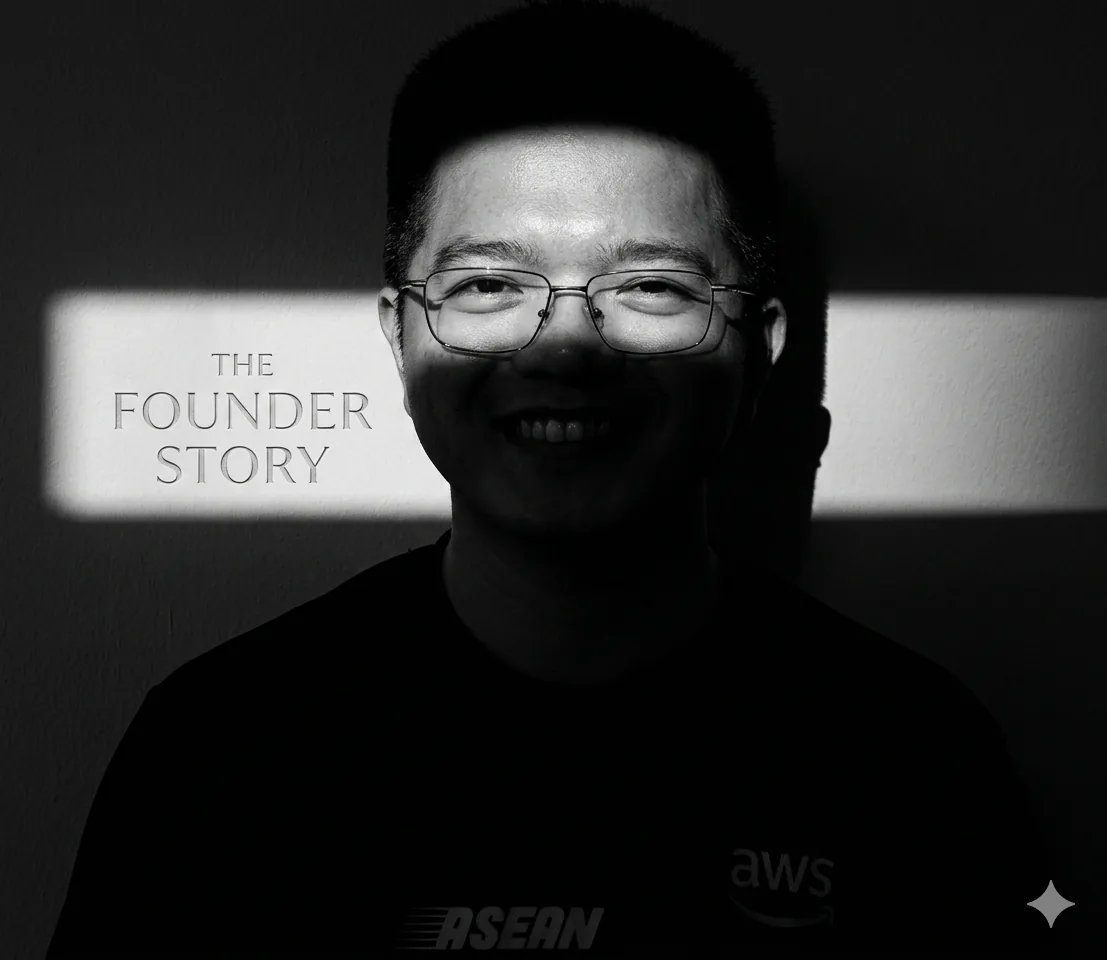
I used to be the person awake for days on end, trying to save a system on fire. Years working at the world's leading cloud platforms taught me two things: what “good” looks like at the largest scale — and that the 2 a.m. hero never scales. A system can't depend on there always being exactly one person good enough still awake.
I built CloudThinker so no one has to be that lone hero again — so that every company, large or small, has an autonomous operations team that never sleeps, and so that Vietnam and Southeast Asia is where it gets defined, not where it catches up.
Each layer — microservices, cloud, now AI — makes systems change faster than humans can operate them.AgenticOps isn't a choice. It's the only way to close that gap.
A short history
Oct 2025
The research begins.
Agents that can see and understand large systems.
May 2026
10+ enterprises served.
Pre-seed round raised.
Now
Building the Agentic Era.
The chapter where agents become autonomous.
See. Act. Learn.
— Steve Tran, Founder & CTO, CloudThinker